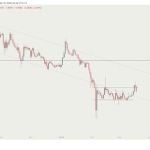
Financial institutions continue to bolster their Bitcoin holdings despite recent price declines. This move underscores a strategic commitment to digital assets, as large-scale investors aim to leverage potential long-term value benefits.
According to data from crypto analytics firm Glassnode, institutional wallets—those holding significant amounts of Bitcoin—are witnessing a notable increase in their reserves. This trend is particularly evident over the past few months, highlighting an ongoing confidence in Bitcoin’s prospects among institutional investors, even as market prices show volatility.
The data indicates that wallets containing more than 1,000 Bitcoins have seen a consistent rise in holdings. This accumulation reflects a strategic positioning by institutional investors as they seek to capitalize on potential future price recoveries and the overall adoption of digital currencies.
James Butterfill, Head of Research at CoinShares, noted that the increase in holdings by institutional wallets could be attributed to anticipation of regulatory clarity, which many believe could pave the way for broader adoption of cryptocurrencies. “Institutional investors are looking beyond the current price fluctuations and are focusing on the regulatory developments that could define the market structure,” Butterfill stated.
In contrast, smaller retail investors have shown a tendency to react more to short-term market movements. This behavior often results in selling during price dips, which stands in stark contrast to the accumulation strategy seen among institutional investors.
Despite the price decline, Bitcoin remains the dominant cryptocurrency in terms of market capitalization, a factor that continues to attract institutional interest. Moreover, recent developments in the regulatory landscape, such as the potential approval of Bitcoin ETFs, have fueled optimism among institutional investors. Such instruments would offer a more straightforward and regulated avenue for investing in Bitcoin, potentially increasing its appeal to a wider range of institutional clients.
The possibility of central banks and financial institutions integrating blockchain technology and digital currencies into their systems is another factor fueling institutional interest. As traditional financial institutions explore the incorporation of crypto assets into their portfolios, they are likely to increase their Bitcoin holdings as a hedge against inflation and currency devaluation.
However, the Bitcoin market is not without risks. The volatility of cryptocurrency prices and regulatory uncertainties remain significant impediments. Despite these challenges, the long-term outlook for Bitcoin and other digital assets is viewed positively by many in the financial industry.
As the market evolves, institutional investors are expected to play a crucial role in defining the trajectory of Bitcoin and cryptocurrencies. Their growing presence in the market could lead to increased stability and maturity, potentially attracting further investment.
In conclusion, while the current market presents challenges, the strategic accumulation of Bitcoin by institutional investors highlights a forward-looking approach that prioritizes long-term value over short-term fluctuations. The evolving regulatory landscape and technological advancements will likely shape the future role of cryptocurrencies in the global financial system.
The recent uptick in institutional Bitcoin holdings comes despite Bitcoin’s price falling below $30,000 in January 2026, a level it had maintained for several months prior. This price movement has not deterred major players such as Grayscale Investments, which continues to expand its Bitcoin Trust. The company believes that the current market conditions provide a unique buying opportunity for long-term investors.
In a report released by Fidelity Digital Assets, the firm highlighted that institutional interest in cryptocurrencies is driven by both a desire for diversification and the potential for high returns. Tom Jessop, President of Fidelity Digital Assets, emphasized that institutional investors are increasingly viewing Bitcoin as a viable alternative asset class, regardless of short-term price movements.
Furthermore, the influence of institutional investors in the Bitcoin market is becoming more pronounced. As noted by Chainalysis, an analytics firm specializing in blockchain data, the share of Bitcoin held by institutional investors has grown significantly over the past year. This shift suggests a changing dynamic where institutional players are assuming a more prominent role in shaping the market’s future.
Despite the challenges posed by market volatility, institutional investors remain optimistic about Bitcoin’s long-term potential. This sentiment is echoed by Michael Sonnenshein, CEO of Grayscale, who stated that the firm is committed to expanding its Bitcoin offerings and remains confident in the asset’s ability to deliver substantial returns over time. As institutional interest continues to grow, the impact on Bitcoin’s market behavior and overall adoption is likely to be significant.
BlackRock, a leading global investment management corporation, has also shown increased activity in the cryptocurrency space. In a recent statement, BlackRock’s CEO Larry Fink emphasized the potential of digital assets, suggesting that they could revolutionize the financial industry. This aligns with the firm’s recent filing for a Bitcoin ETF, which, if approved, would mark a significant milestone for institutional adoption of cryptocurrencies.
Meanwhile, MicroStrategy, known for its substantial Bitcoin reserves, continues to advocate for Bitcoin as a primary treasury reserve asset. As of January 2026, MicroStrategy holds approximately 150,000 Bitcoins, reflecting its unwavering commitment to the digital currency. Michael Saylor, the company’s Executive Chairman, reiterated during a recent earnings call that Bitcoin remains central to the firm’s strategy, despite the current market fluctuations.
The Chicago Mercantile Exchange (CME) has reported an uptick in Bitcoin futures trading volume, indicating growing institutional interest. According to the CME, January 2026 saw one of the highest trading volumes in recent months, suggesting that institutional investors are actively engaging with derivative products to hedge against price volatility or speculate on future price movements.
Amid these developments, regulatory bodies such as the U.S. Securities and Exchange Commission (SEC) are under increased pressure to provide clearer guidelines on cryptocurrency investments. While the SEC has yet to approve a Bitcoin ETF, the ongoing accumulation by institutional investors suggests a belief that regulatory frameworks will eventually evolve to accommodate the growing interest in digital assets.
On January 15, 2026, the Bank of New York Mellon announced it had increased its Bitcoin custodial services, reflecting the rising demand from institutional clients. The bank stated that the decision was driven by a significant uptick in inquiries from hedge funds and asset managers seeking secure storage solutions for their cryptocurrency holdings. This move is seen as part of a broader trend among traditional financial institutions to integrate digital assets into their service offerings.
Similarly, the crypto asset management firm Pantera Capital revealed on January 18, 2026, that its Bitcoin Fund had attracted approximately $150 million in new investments over the past quarter. Dan Morehead, CEO of Pantera Capital, remarked that institutional investors are increasingly recognizing Bitcoin’s potential as a long-term store of value. Morehead emphasized that the recent market volatility has not deterred investors who are focused on the asset’s long-term trajectory.
In a recent interview, Galaxy Digital CEO Mike Novogratz commented on the resilience of institutional Bitcoin accumulation despite price fluctuations. He noted that the firm continues to expand its Bitcoin-related services, citing the growing interest from institutional clients as a key driver. As of January 2026, Galaxy Digital has reported a 25% increase in its Bitcoin trading volume compared to the previous quarter, underscoring the sustained engagement from large-scale investors.
On the regulatory front, the European Central Bank (ECB) signaled on January 20, 2026, that it is closely monitoring the institutional involvement in cryptocurrencies. ECB President Christine Lagarde stated that while the bank acknowledges the role of digital assets in modern finance, it remains cautious about potential risks. This cautious stance highlights the ongoing dialogue between regulatory bodies and financial institutions as they navigate the evolving landscape of cryptocurrency investments.
Post Views: 1